The AEO/GEO playbook: how funded practices win the AI answer box
Patients now ask ChatGPT and AI Overviews for a provider before they ever see a search results page. Here is the operating model that puts your locations inside the answer.
Why rankings stopped being the scoreboard
For a decade, growth teams optimized for position on a page of ten blue links. Answer engines collapsed that page into one paragraph and two or three named providers. If your group is not one of them, the click never happens — and no amount of paid media recovers a patient who was already handed a recommendation.
For multi-location groups the exposure is multiplied. Every location is its own answer surface, with its own hours, providers, insurance list and review corpus. One stale listing in one market quietly removes that market from the answer.
The four inputs answer engines actually read
Across audits of funded practices, the same four inputs decide who gets named:
- Entity consistency — identical NAP, provider names and specialties across the publisher network.
- Structured data — Organization, MedicalClinic, Physician and FAQPage schema on every location and service page.
- Fresh review corpus — recency and volume matter more than a static average rating.
- Answerable content — pages written as questions and direct answers, not brochure prose.
How to operationalize it
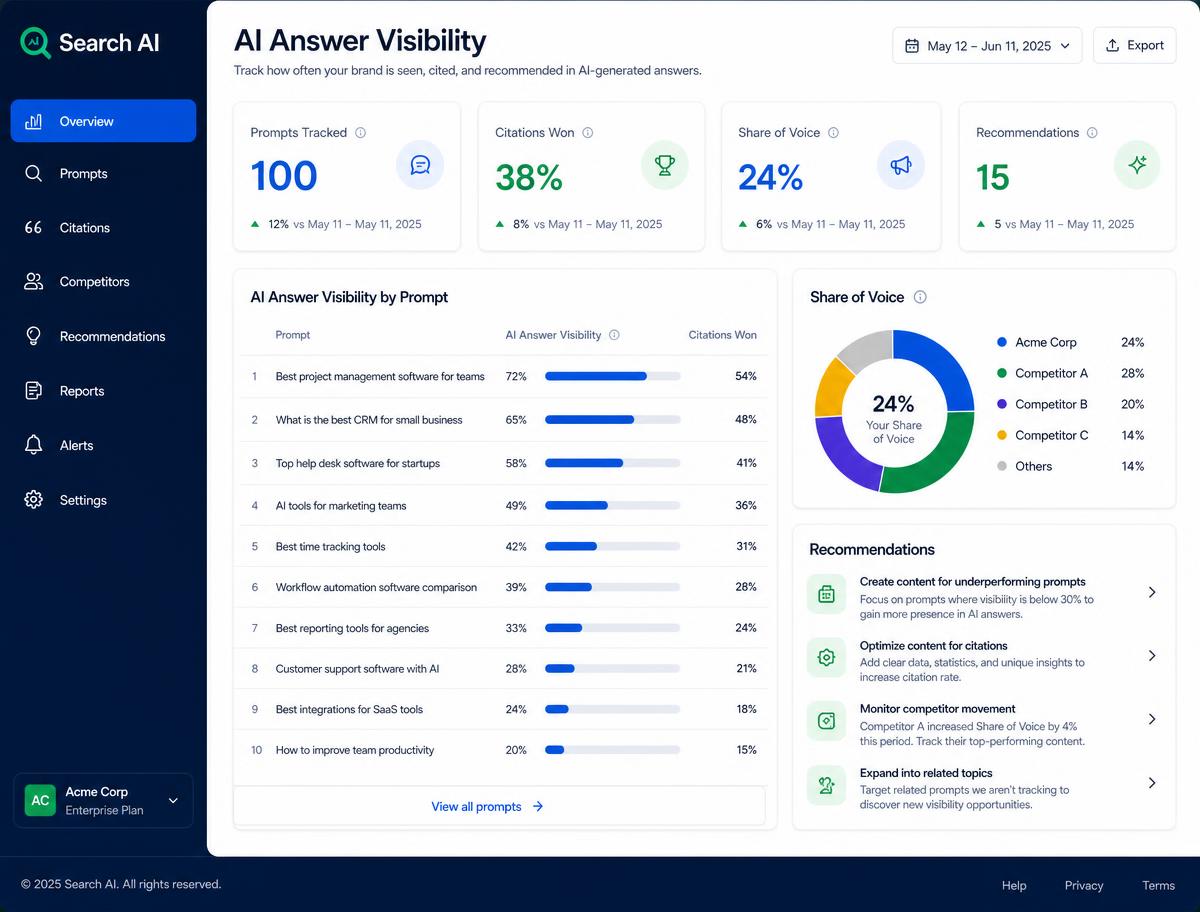
Build a 100-prompt bundle per specialty and market — the real questions patients type. Track which engine names you, which names a competitor, and which names nobody. That gap list becomes your content and listings backlog for the quarter.
Then close the loop weekly. AI answers shift far faster than classic rankings, so a quarterly SEO report is a rear-view mirror. Weekly share-of-answer per location is the metric that belongs on the board deck.